

Maybe it started with an IRS letter. Or maybe it was a sinking realization: the account you kept in another country, an inheritance from overseas, or rent from a property abroad never made it onto your U.S. tax return. Either way, the stress is real.
Here is the reassuring part. You have options, and learning how to resolve IRS tax problems tied to foreign income is far easier when you come forward before the IRS comes to you. The worst move is to ignore it and hope it goes away.
Below, we cover what happened to the Offshore Voluntary Disclosure Program (OVDP), today’s disclosure paths, FBAR penalties, and a step-by-step resolution strategy.
Why Undisclosed Foreign Income Gets IRS Attention
U.S. citizens and resident aliens are taxed on worldwide income, including foreign interest, dividends, rents, and capital gains, even if the money never comes home.
On top of reporting the income, you may also have to report the accounts themselves:
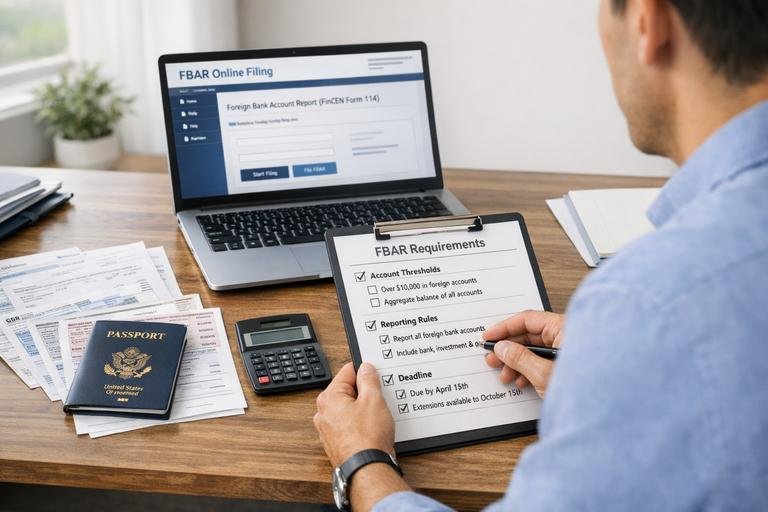
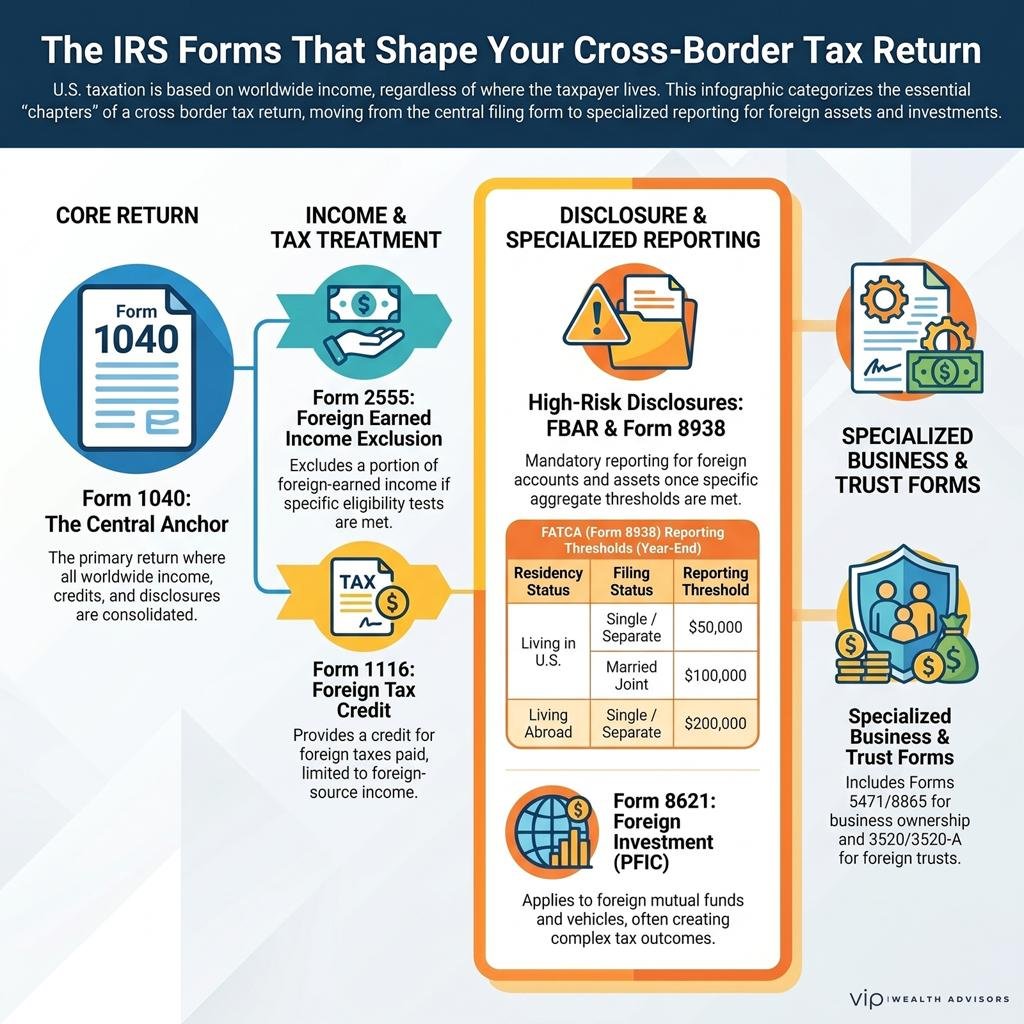
- FBAR (FinCEN Form 114): Required if the combined value of your foreign financial accounts exceeded $10,000 at any time during the year.
- Form 8938 (FATCA): Filed with your tax return when your specified foreign financial assets exceed certain thresholds, which vary by filing status and where you live.
- Other forms: Forms 5471, 3520, and others may apply to foreign businesses, trusts, gifts, or inheritances.
Under FATCA, many foreign banks report U.S. account holders to the IRS, so the IRS may already know about your accounts.
What Happened to the Offshore Voluntary Disclosure Program (OVDP)?
Many people still search for “OVDP,” but the Offshore Voluntary Disclosure Program closed on September 28, 2018.
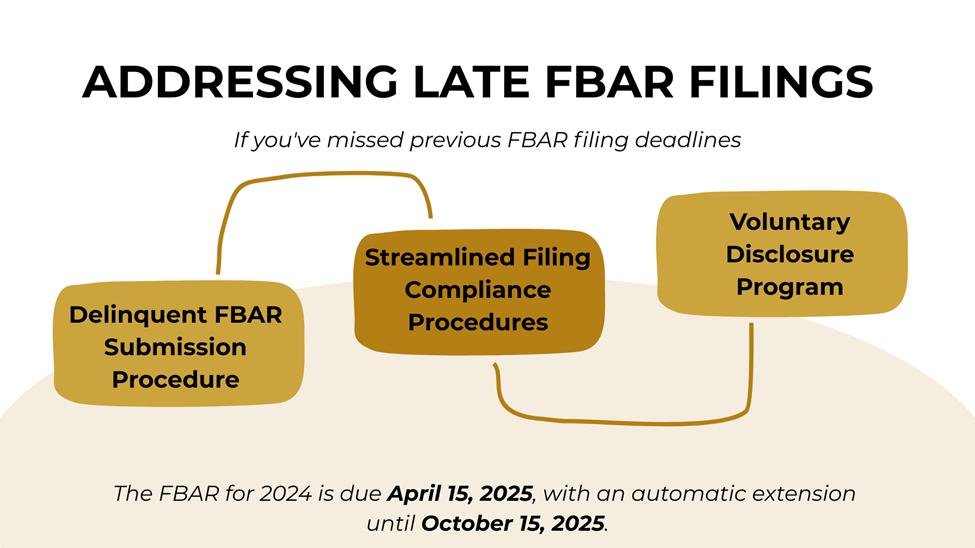
Today, taxpayers with undisclosed foreign income generally choose among four paths. Which one fits depends largely on one question: was your failure to report willful or non-willful?
1. IRS Criminal Investigation Voluntary Disclosure Practice (VDP)
The VDP is designed for taxpayers whose noncompliance was willful and who may face criminal exposure. You start by submitting Form 14457 for preclearance before the IRS has opened an exam or investigation. Under the current framework, the disclosure period generally covers the most recent six years, and penalties typically include a 75% civil fraud penalty on the year with the highest tax liability plus a willful FBAR penalty, generally 50% of the highest aggregate account balance.
The IRS proposed VDP updates in December 2025, including a simpler penalty structure. They were not finalized as of this writing, so confirm current rules before filing.
2. Streamlined Filing Compliance Procedures
If your failure to report was non-willful (an honest mistake, misunderstanding, or negligence), the Streamlined Procedures are often the most cost-effective route. You file three years of amended or delinquent tax returns and six years of FBARs, pay the tax and interest, and certify under penalty of perjury that your conduct was non-willful.
- Streamlined Domestic Offshore Procedures: For U.S. residents. Includes a 5% miscellaneous offshore penalty based on the highest year-end aggregate balance of the unreported foreign assets.
- Streamlined Foreign Offshore Procedures: For taxpayers who meet the non-residency test. No miscellaneous offshore penalty applies.
3. Delinquent FBAR Submission Procedures
If you reported all your foreign income and paid the tax but simply missed filing FBARs, you may be able to file the late FBARs with an explanation. If you are not under examination and have not been contacted about the missing FBARs, the IRS generally will not impose a penalty.
4. Delinquent International Information Return Submission Procedures
This path covers missed information returns, such as Forms 5471 or 3520, where you have reasonable cause for the failure and are not under exam or investigation.
Understanding FBAR Penalties
FBAR penalties are separate from income tax penalties and can be severe. The amounts below are the inflation-adjusted maximums currently in effect:
| Violation type | Maximum civil penalty | Key point |
| Non-willful | Up to $16,536 | Applied per annual report, not per account (Bittner v. United States, 2023) |
| Willful | Greater of $165,353 or 50% of the account balance | Applied per account, per violation |
| Criminal | Fines up to $250,000 and up to 5 years in prison | Reserved for the most serious willful cases |
Income tax penalties, such as the 20% accuracy-related penalty or 75% civil fraud penalty, plus interest, can stack on top. That is why choosing the right path matters.
How to Resolve IRS Tax Problems Involving Foreign Income: Step by Step
Step 1: Understand What an IRS Notice Means (and Do Not Ignore It)
If you received a letter, read it carefully. It may propose additional tax, request information about foreign accounts, or open an audit. Each has a response deadline.
Timing matters. Once the IRS opens an exam or contacts you about foreign accounts, you may no longer qualify for the disclosure programs above. If you have not heard from the IRS, your options are at their widest. If you have, get IRS tax notice help right away.
Step 2: Gather and Review Your Tax Records
Build a complete picture before you choose a path. Collect:
- Statements for every foreign bank, brokerage, pension, and insurance account
- The highest balance of each account for each year
- Records of foreign income, plus past U.S. returns and any FBARs you filed
- Documents for foreign businesses, trusts, gifts, or inheritances
Step 3: Honestly Assess Willful vs. Non-Willful Conduct
This is the most important decision in the process. Falsely certifying non-willfulness can create serious civil and even criminal exposure, while entering the VDP when your conduct was non-willful can mean paying far more than necessary. A professional review of what you knew, and when, is well worth it.
Step 4: File Missing or Amended Returns and FBARs
Once you have chosen a path, prepare the required returns, FBARs, and information forms, plus any certifications or narratives the procedure requires. Avoid a “quiet disclosure,” where you simply amend returns going forward without using a formal procedure. The IRS has said it may examine quiet disclosures, and penalties can follow.
Step 5: Choose Your Payment and Resolution Options
Coming forward usually means paying tax, interest, and any applicable penalty. If you cannot pay everything at once, review your tax debt payment options:
- Paying in full with your submission, which stops interest from growing
- An installment agreement to pay over time, where the procedure allows it
- An offer in compromise in limited cases where you truly cannot pay the full amount
Unpaid balances can lead to federal tax liens, bank levies, and wage garnishments, so a realistic payment plan belongs in any resolution strategy.
When to Seek Professional Help
Consider professional IRS tax resolution help if:
- You received an IRS letter about foreign accounts or income
- Your foreign balances are large or span several countries
- You are unsure whether your conduct would be viewed as willful
- You own foreign corporations, partnerships, or trusts
- You are already under audit or facing liens, levies, or garnishments
An experienced team can compare your options, prepare filings, deal with the IRS for you, and help you decide whether a tax attorney is also needed.
Common Mistakes to Avoid
- Waiting for the IRS to contact you. That can close the door on the most favorable programs.
- Making a quiet disclosure instead of using a formal procedure.
- Overstating non-willfulness to qualify for lower penalties.
- Moving or closing accounts to hide them. This can be viewed as evidence of willfulness.
- Filing with incomplete records, which can lead to rejected submissions or new notices.
Frequently Asked Questions
Is the IRS Offshore Voluntary Disclosure Program (OVDP) still available?
No. The OVDP closed on September 28, 2018. Willful cases now use the IRS Criminal Investigation Voluntary Disclosure Practice; non-willful cases typically use the Streamlined Procedures or delinquent submission procedures.
What is the penalty for not filing an FBAR?
For non-willful violations, the maximum civil penalty is currently $16,536 per annual report. For willful violations, it is the greater of $165,353 or 50% of the account balance, per violation. Criminal penalties may apply in serious cases.
Can I report foreign income without paying penalties?
Sometimes. Taxpayers who qualify for the Streamlined Foreign Offshore Procedures pay no miscellaneous offshore penalty. If you reported all income and only missed FBARs, the Delinquent FBAR Submission Procedures may result in no penalty. Tax and interest are still due.
Does voluntary disclosure guarantee I will not be prosecuted?
No. A timely, complete, and truthful voluntary disclosure does not guarantee immunity, but it may result in the IRS not recommending criminal prosecution.
How many years back do I need to file?
The Streamlined Procedures require three years of tax returns and six years of FBARs. The VDP generally covers a six-year disclosure period.
Take the First Step Toward Resolving Your Foreign Income Issue
Undisclosed foreign income is stressful, but it is fixable. Knowing how to resolve IRS tax problems starts with understanding your options, gathering your records, and choosing the right disclosure path before the IRS makes the choice for you.
Legacy Tax & Resolution Services helps individuals, self-employed taxpayers, and small-business owners nationwide with IRS notices, back taxes, unfiled returns, audits, liens, levies, and wage garnishments. Request a free initial consultation to review your situation and your next steps.
Visit www.legacytaxresolutionservices.com or call 800-829-7483 today.